For years, link building meant one thing: get as many backlinks as possible. But in 2026, Google's AI Overviews now appear on nearly half of all searches — and the rules have quietly changed. The agencies winning today aren't the ones with the most links. They're the ones earning the right kind of attention. That's where digital PR link building comes in.
In this guide, we'll explain what digital PR link building actually is, why it outperforms traditional tactics in the age of AI search, and how to run a campaign that earns authoritative, editorial links — the kind that both Google and AI engines trust.
What Is Digital PR Link Building?
Digital PR link building is the practice of earning high-authority backlinks by creating newsworthy content — original research, data studies, expert commentary, or compelling stories — and pitching it to journalists, editors, and publishers. Instead of paying for a placement or swapping links, you earn coverage on the strength of the story itself.
The result is a link from a real editorial publication, often with a Domain Rating (DR) of 70 or higher, surrounded by genuine context and frequently accompanied by a brand mention. Compare that to a typical guest post, which usually lands a single link on a DR 30–50 site. One well-executed digital PR campaign can generate dozens of unique referring domains at once.
Digital PR vs. guest posting in one line Guest posting gives you a predictable link with controlled anchor text. Digital PR gives you authority, scale, and brand visibility — the signals that increasingly drive both rankings and AI citations.
Why AI Overviews Changed the Link Building Game
Google's AI Overviews — the AI-generated answers now sitting at the top of search results — appeared on roughly 48% of queries by early 2026, up from around 34% just a few months earlier. When an AI Overview appears, the number-one organic result can lose close to 18% of its clicks. For informational searches, the drop can reach 30–40%.
But here's the opportunity: sites that get cited inside an AI Overview earn about 35% more clicks than they would from a standard first-place ranking. The question every agency should be asking is no longer "how do I rank #1?" but "how do I become a source AI engines cite?"
The answer is authority and trust — exactly what digital PR is built to create. AI systems aggressively filter out manipulated link signals. A site with 500 spammy backlinks is now less likely to be cited than a site with 50 editorial links from recognized publishers. If you're still unsure whether links matter at all in this new era, our breakdown of what SEO backlinks will really work in 2026 covers the shift in detail.
What No Longer Works (and Is Now Risky)
Before we cover what to do, let's be clear about what to stop doing. These tactics aren't just ineffective in 2026 — they can actively hurt you:
- Private blog networks (PBNs) — AI search systems detect and discount these networks at scale.
- Bulk backlink packages — "1,000 links for $50" offers create patterns Google's spam systems flag instantly.
- Low-quality directory submissions — mass directory links carry almost no weight and can look manipulative.
- Exact-match anchor text at scale — over-optimized anchors are a classic over-optimization signal.
Google's March 2024 spam policy update and subsequent enforcement made it clear: scaled, manipulative link practices are a liability. The safest, most durable strategy is to earn links editorially.
Why Digital PR Wins in 2026
Digital PR aligns perfectly with how modern search — and modern AI — evaluates trust. Here's what makes it the smartest investment right now:
- Higher authority per link. Editorial coverage routinely comes from DR 70+ publications, passing far more trust than the average paid placement.
- Brand mentions, not just links. Research shows brand mentions correlate roughly 3x more strongly with AI search visibility than backlinks alone. Digital PR produces both.
- Scale from a single campaign. One strong data story can be picked up by dozens of outlets, multiplying referring domains.
- Lower long-term risk. Because links are earned, not manufactured, they survive algorithm updates that punish manipulation.
According to Ahrefs, editorial relevance and authority remain the strongest predictors of a link's value — and those are precisely the qualities digital PR is designed to produce.
How to Run a Digital PR Link Building Campaign
You don't need a newsroom budget to start. Here's a practical, repeatable process.
Find a data angle Look for a question your industry cares about and answer it with original data — a survey, an analysis of public datasets, or insights from your own platform.
Create the asset Turn that data into something linkable: a study, an interactive report, or a strong statistic with a clear narrative.
Build a targeted media list Identify journalists and editors who actually cover your topic. Relevance beats volume every time.
Pitch the story, not the link Lead with why their audience will care. The link follows naturally when the story is genuinely useful.
Amplify and repurpose Share the asset across your channels and pitch follow-up angles to extend the campaign's life.
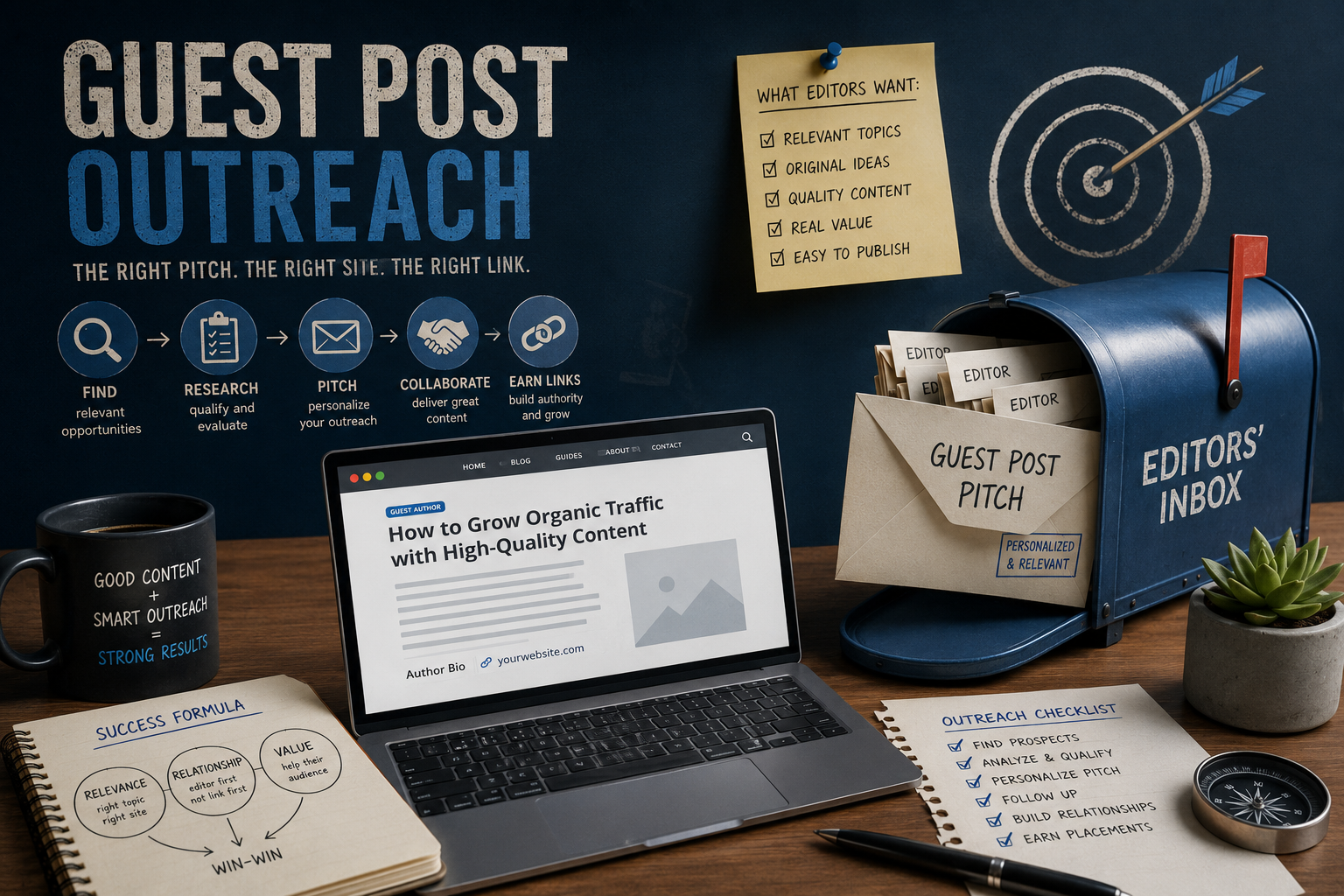
If you'd rather combine digital PR with targeted, niche-relevant placements, guest posting still has a role. Our guide on how to buy guest posts that rank explains how to do it safely and effectively alongside a digital PR program.
Does This Work for Every Industry?
Yes — though the approach varies by niche. Highly regulated or competitive verticals need extra care around relevance and compliance. For example, sectors like iGaming require a particularly disciplined, white-hat approach; we cover that in our article on safe strategies for gambling SEO. The core principle holds everywhere: earn trust from sources your audience already trusts.
The Bottom Line
AI Overviews didn't kill link building — they refined it. The links that move the needle in 2026 are editorial, authoritative, and earned. Digital PR delivers exactly that: high-DR backlinks, brand mentions that fuel AI visibility, and a link profile that's resilient to algorithm changes.
If you want to build authority the right way — links that both Google and AI engines respect — that's exactly what we do at Weblinks Agency. Explore our partnership options and let's build a link profile that's ready for the AI search era.